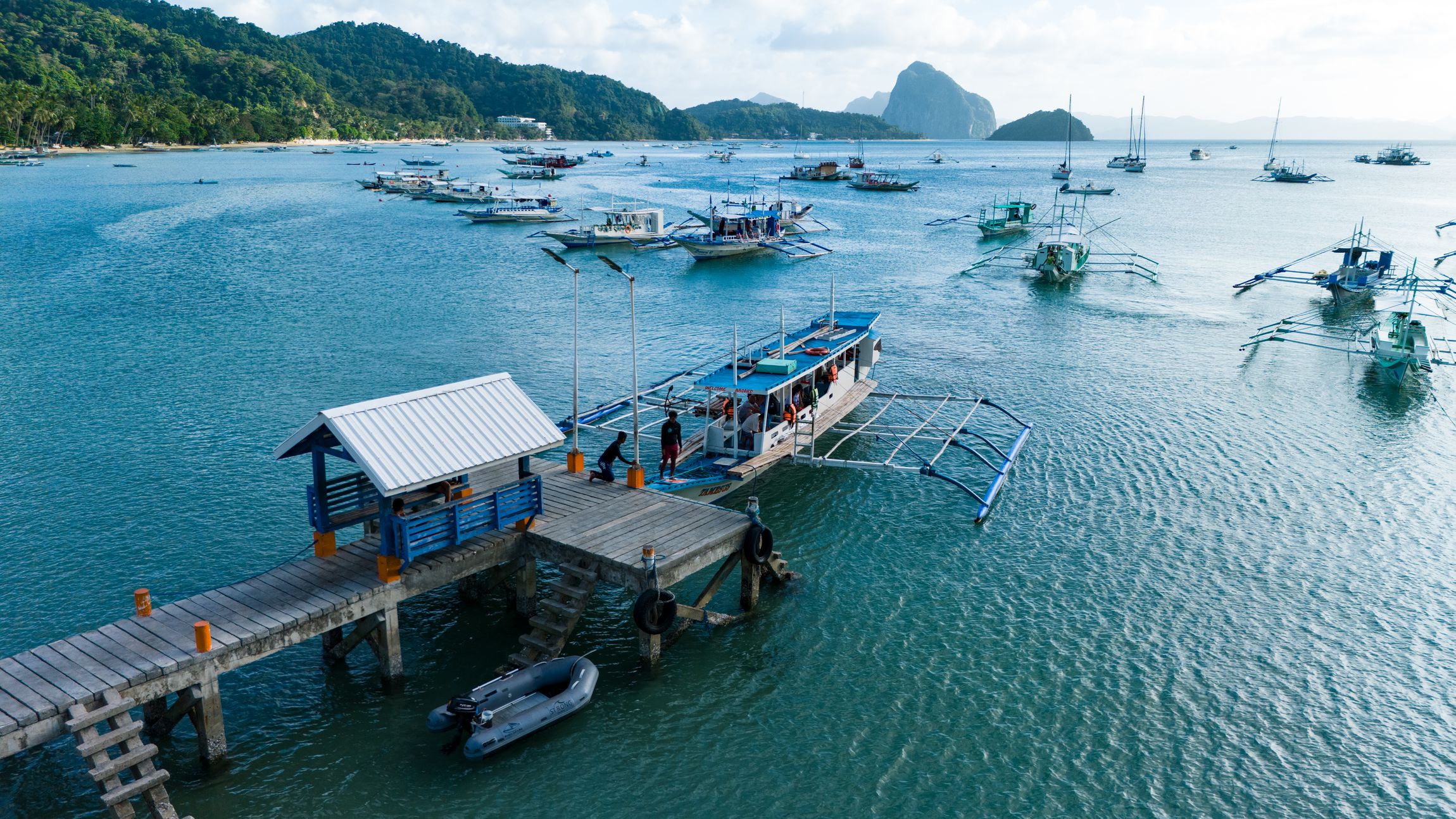

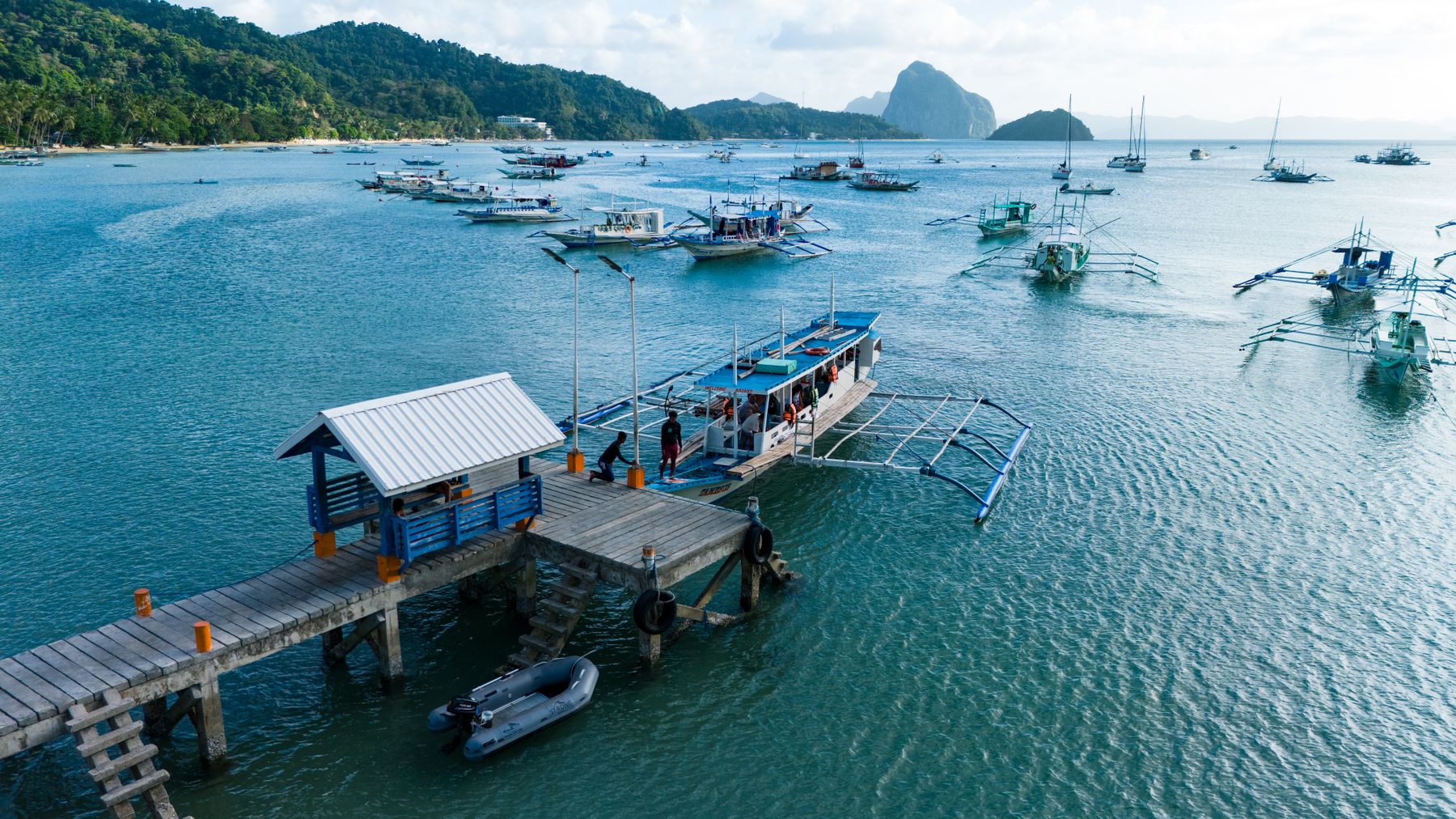
Talking is easy here, because English is spoken almost everywhere. Moving is the hard part: every island change is a flight or a boat, the boats answer to the weather, and wifi on the islands is slow or missing. Install everything below while you are still on home wifi.
Plan Philippines in Stippl
Day-by-day planning, stays and budget in one app, with every place from this guide already on the map.
Download the appWhich apps do you need for the Philippines?
The top travel apps for the Philippines, grouped by where you use them:
- Stippl: plan the islands, the flights and boats, the stays and the budget in one trip
- eTravel: the free arrival registration and its QR code
- An eSIM: data from the moment you land
- Grab, or Sakay in Manila: rides and routes in the cities
- OceanJet and 12Go: ferry tickets between the islands
- Google Maps or Maps.me: offline maps for islands with weak signal
- Messenger and Viber: how guesthouses, boats and rentals take bookings
- Cash, with GCash or Maya as extras: how you pay once you leave the city
Numbers 2 to 8 each fix one moment of the trip. Stippl is the one you open before you have booked anything, so it comes first.
Stippl: the best app to plan your Philippines island hopping
A Philippines route is a chain of flights and ferries with a few islands hung between them, and that chain is what Stippl keeps in order. More than 64,000 Philippines trips have been planned with it, with more than 336,000 stops between them. Each island is a stop on the map, each flight or boat a leg with its time, and the stays, tickets and pesos sit against the day they belong to.
Every flight and ferry as a leg
When you add two islands, Stippl draws the leg between them and you choose what it is: a domestic flight, an OceanJet fast ferry, a bus to the pier or a bangka. Paste the booking reference and departure time into the leg, and on the day the ticket is where you need it, on the pier with no signal. A ferry that sits the day before your flight home shows up on the timeline before it becomes a problem.
Sample route: two weeks, the Visayas by ferry, then Palawan
This is the route we would copy for a first trip that starts in the Visayas: three islands joined by bus and ferry, then one flight west to El Nido. Fourteen nights, six stops, best from January to April.
| Stop and nights | Leg to the next stop | Time and price |
|---|---|---|
| Cebu City, 1 night | Ceres bus "Bato via Barili" from the South Bus Terminal | 3 to 4 hours, about €3.50 (₱250) |
| Moalboal, 3 nights | Bus back to Cebu City, OceanJet to Tagbilaran | 3 to 4 hours, then about 2 hours |
| Bohol, 3 nights | Daily direct boat to Siquijor | about 90 minutes, under €13 (₱935) |
| Siquijor, 3 nights | OceanJet back to Cebu via Bohol | about 5 hours |
| Cebu City, 1 night | Flight to El Nido | direct on AirSwift when it runs, otherwise via Manila; check the timetable and book months ahead |
| El Nido, 3 nights | Fly home via Manila | about 1 hour 30 to Manila |
Read it as a list of which app does which leg. Grab gets you from Mactan airport into Cebu City in 35 to 50 minutes for about €3.50-7 (₱250-500). The Ceres bus takes cash only, on board. OceanJet sells the Cebu to Tagbilaran ferry and the run back from Siquijor on its own site. The Bohol to Siquijor boat is the one that sells out, so buy it the day your dates are fixed. On Moalboal and Siquijor there is no Grab: Messenger finds you a scooter or a tricycle driver.
Turn these stops into a route
Pick your favourites and Stippl orders them, adds travel times and builds the day-by-day.
Prefer to start in Manila and fly to Palawan first? Our Philippines trip planner builds that route step by step, and the Philippines itinerary for 2 weeks goes day by day. Or swap El Nido for Siargao, about an hour from Cebu by air and best from March, and the legs update with you.
Budget in pesos: flights and island tours
Budget the trip in pesos, with your own currency alongside. In the Philippines two lines decide the total: travellers who logged their spending paid €47 (₱3,400) for a typical island tour and €88 (₱6,350) for a typical domestic flight. Log them on the leg or the stop they belong to, and our Philippines trip cost guide fills in the rest.
Track what you actually spend
Set a daily budget per country and log expenses in any currency while you travel.
Offline on the islands
Wifi is slow across the country and absent on some islands. A trip you have opened once on wifi stays readable on your phone, so the stops, booking details and boat times are there on a pier with no signal. The season sets the rest: the dry months run roughly December to April, and Siargao is dry only from March. Our guide to the best time to visit the Philippines covers each island month by month.
The apps for the city, the water and the island
The Philippine hurdles come in a fixed order: a registration before you land, a ride from the airport, a boat to book, and an island where your card stops working. Here is the app for each.
Before you land: eTravel
Every arrival has to register on eTravel, within the 72 hours before you land. It takes about five minutes, it is free, and it gives you a QR code that immigration scans. Use only the official site: paid look-alikes exist. Have your onward or return ticket ready too, because it gets checked at the gate.
Before you land: an eSIM
Every app on this list needs data, and island wifi will not carry you. Globe and Smart are the two networks, with about 9 GB for about €14 (₱1,000). An eSIM installs at home and connects when you land, with no SIM queue at the airport. You can get a Philippines eSIM through Stippl while you plan.
In the city: Grab, and Sakay in Manila
There is no Uber in the Philippines. Grab is the app to have: a fixed price on screen before you ride, and you pay in cash, by card or in the app. It covers Metro Manila, Cebu, Davao, Iloilo, Bacolod, Baguio and a handful of other cities, but not Palawan, Bohol, Siquijor or Siargao. From Manila's airport to Makati a Grab costs about €4.20-8.30 (₱300-600).
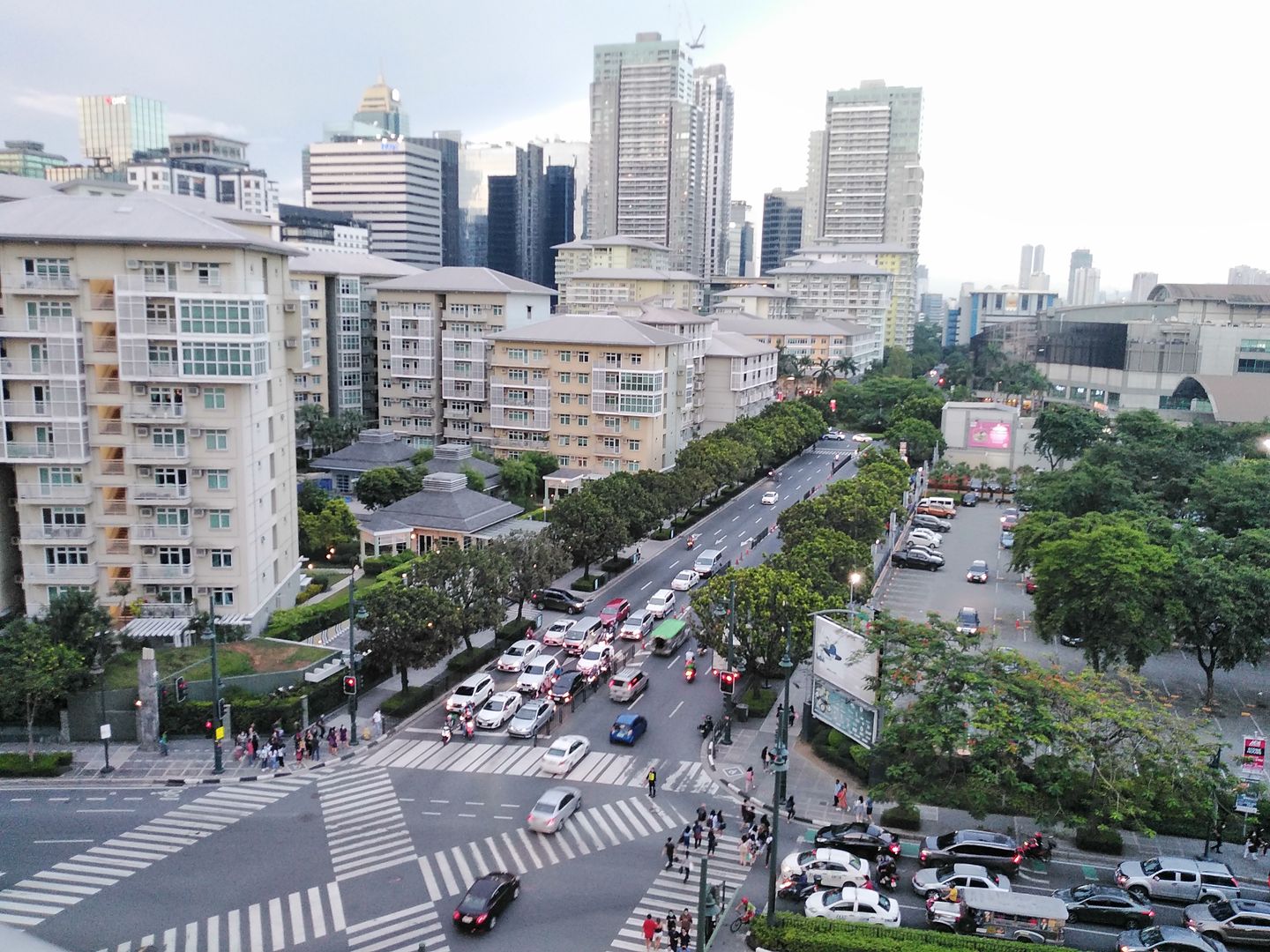
Starting in Manila and curious about the jeepneys? Sakay.ph is the free route planner for Metro Manila's public transport: jeepneys, buses, the MRT and LRT lines, UV Express vans and the Pasig River Ferry, with the route and an estimated fare.
On the water: OceanJet and 12Go for ferries
In the Visayas, OceanJet sells its fast ferries online, including Cebu to Tagbilaran on Bohol and Cebu to Siquijor. Book there rather than queueing: the counters at Cebu's Pier 1 are packed. For other operators, buses and the El Nido to Coron boat, 12Go is the booking layer that works when local counters are hard to reach. Book the boat, then add it to its leg in Stippl with the departure time and the pier.
Editor's tip: Buy the Bohol to Siquijor boat as soon as your dates are fixed. The daily direct boats sell out, and the fallback is a much longer trip back through Cebu.
On the water: Google Maps or Maps.me offline
Offline maps are close to essential here. Download Google Maps offline for each island, or use Maps.me, before you leave the city. Treat the driving times with suspicion: road quality varies, and on Cebu the map sends you inland to Osmeña Peak over steep, poor roads when the coast road via Alegria is fully paved. On the islands, double whatever the map says.
On the island: Messenger and Viber for bookings
Messenger is the app almost everyone in the Philippines uses, and Viber follows. On the islands that is where the bookings happen: a guesthouse, a scooter rental or a boat captain replies in a chat far faster than by email, and Facebook, not Google, is where many small businesses actually advertise. Search the place's page, send a message, and paste the confirmation into the stop's notes in Stippl.

On the islands there is generally no Grab, so it is tricycles, priced per vehicle and agreed before you get in. A message the day before often gets you a driver at the pier.
On the island: cash, with GCash or Maya as extras
Cash still rules once you leave the city. Cards work at large hotels and restaurants and almost nowhere else, and small islands may have no working ATM, so withdraw before you take the boat.
GCash has taken over in towns, and it now has GTourist, a 30 day wallet for visitors that activates once you land, but in October 2026 it took US (+1) phone numbers only; check the app before you count on it. Maya accepts a foreign passport, yet you need a Philippine SIM to sign up, which suits a long stay more than a two week trip. For most travellers that means cash first, and an e-wallet only if your hotel helps you set it up. Switch European bank cards to worldwide use before you go.
Before you fly: eTravel, the eSIM and the boats that sell out
Five things to sort at home, on wifi, the week before you go:
- Open your Stippl trip on your phone so the route, stays and boat times are saved.
- Register on eTravel within 72 hours of arrival and save the QR code.
- Install the eSIM at home and switch it on as the plane lands in Manila or Cebu.
- Install Grab, Messenger and the ferry apps, and book the boats that sell out.
- Download offline maps for each island, in Google Maps or Maps.me.
Then take enough pesos for the first island. The ATM you were counting on might be empty.
Frequently asked questions about Philippines
Stippl, because it puts every island, domestic flight and ferry on one map as legs with their times, next to the stays and a budget in pesos. More than 64,000 Philippines trips have been planned with it; on the ground you add eTravel, an eSIM, Grab, OceanJet and Messenger.
Grab. Uber does not operate in the Philippines, and Grab shows a fixed price before the ride in Manila, Cebu and the other big cities. On the islands there is generally no Grab, so you agree a price with a tricycle.
Messenger, followed by Viber. Guesthouses, boat operators and rentals answer there, often faster than by email, so install both before you fly.
Cards work at large hotels and restaurants. GCash and Maya are common in towns but hard to set up as a short stay visitor, so carry cash for the islands, where ATMs can be empty or missing.
Book OceanJet on its own site for the Visayas, and use 12Go for other boats and buses. Buy the Bohol to Siquijor boat early, because the direct ones sell out.
In the Philippines the phone does three jobs: it gets you through arrival, it finds the boat, and it holds the booking when the signal drops. Plan your islands in Stippl first, with every flight and ferry as a leg, then pick up the eSIM and eTravel's QR code before you fly.