

Plan Sri Lanka in Stippl
Day-by-day planning, stays and budget in one app, with every place from this guide already on the map.
Download the appBest beaches in Sri Lanka at a glance
Here is the shortlist, coast by coast. On a map it reads like a hook: Negombo sits just north of Colombo by the airport, the west coast runs south past Bentota to Galle, the south coast bends east through Unawatuna, Mirissa, Hiriketiya and Tangalle, and the east coast is the far side of the island, with Arugam Bay in the south east and Trincomalee further north.
| Beach | Coast | Best for |
|---|---|---|
| Unawatuna | South | The easiest swimming on the south coast, thanks to the reef |
| Jungle Beach and Dalawella | South | Snorkelling and turtles, a short ride from Unawatuna |
| Galle Fort | South | Sunset walks on the ramparts, not swimming |
| Mirissa | South | Whale watching, sunsets and the liveliest evenings |
| Weligama | South | A first surf lesson on a big sandy bay |
| Hiriketiya | South | Surf, brunch cafés and a small bay scene |
| Silent Beach and Goyambokka | South | Calm coves and the prettiest scenery near Tangalle |
| Marakolliya | South | Kilometres of empty sand, looking rather than swimming |
| Negombo | West | A first or last night by the airport |
| Bentota | West | Resort hotels and water sports |
| Nilaveli and Uppuveli | East | Wide, quiet sand from May to September |
| Arugam Bay | East | Point break surf in the east coast season |
The most beautiful? Our pick is Silent Beach, the small cove behind the Goyambokka headland near Tangalle. Four separate guides call it the best beach they saw in Sri Lanka, it stays quiet even when the bay next door fills up, and you can actually get in the water there.
Which coast is best for beaches: south, west or east?
The south coast has the most variety and the easiest logistics: a swimming bay, a whale port, surf towns and empty sand all within a couple of hours of each other. The west coast is closest to the airport, which makes it a first or last night rather than the main event. The east coast runs on the opposite season, so it is the one to choose from May to September.
Sri Lanka has two monsoons that hit opposite sides of the island at opposite times, so there is always a dry coast. Our own planning data shows travellers choosing between them: on trips that include Trincomalee, the whole south coast turns up less often than trip length would predict, while Arugam Bay turns up far more often. Pick the coast that matches your dates, then build the rest of the trip around it. For the wider picture of the island, see our Sri Lanka travel guide.
Best beaches on the south coast
This is where most travellers end their trip, and for good reason. The best beaches in Sri Lanka's south coast run west to east from Galle to Tangalle, roughly in the order below, and the season is December to March.
Galle and Unawatuna
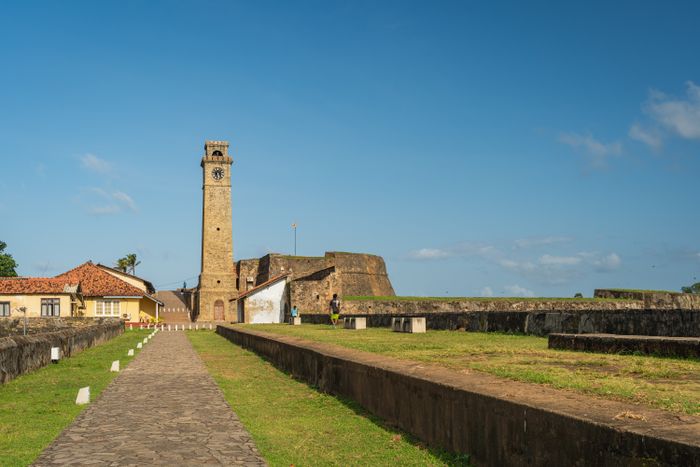
Galle is a walled Dutch fort town, not a beach base. The fort beach below the lighthouse is small and the currents are real, so only swim inside the marked area there. Come for the 2 km walk around the ramparts at sunset instead, when the crowd gathers at Flag Rock Bastion to watch local boys jump from the rocks.
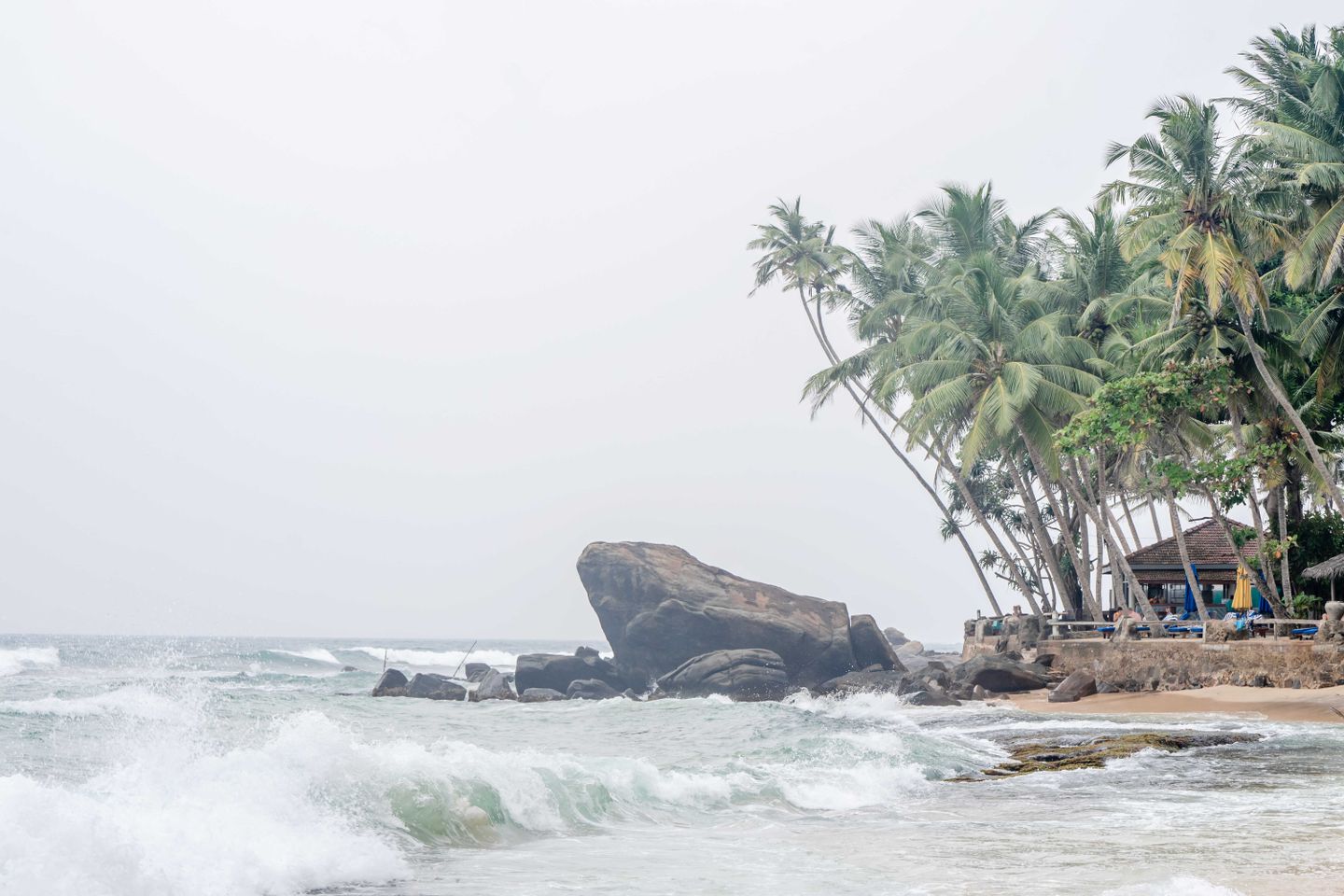
Unawatuna, 5 km east, is where you swim. A coral reef across the mouth of the bay takes the force out of the swell, which makes it the easiest swimming on the south coast and a safe bet for families and nervous swimmers. Thaproban Beach House sits right on the sand, and Koha Surf Lounge in the village is the lunch spot everyone names.
The best water is just outside the main bay. Walk 20 to 30 minutes over the Rumassala headland through coastal forest to Jungle Beach, where the coral is better than in the bay. Or take a tuk-tuk 2 km east to Dalawella, where green turtles feed in a rock pool and the famous palm rope swing has a queue. Mihiripenna, a little further east, has its own swing and hardly anyone on it.
One thing our data makes clear: travellers pick Galle or Unawatuna, rarely both. They are a ten-minute tuk-tuk apart, so sleep on the bay for swimming and price, or in the fort for architecture and food, and visit the other.
Read more: things to do in Galle
Mirissa
Mirissa is the liveliest beach town on the south coast and the country's whale-watching port. The bay is a single 150 m crescent with a headland at each end, restaurants and sunbeds along the sand and bars that run late. It suits first-timers, backpackers and anyone who wants a buzz after dark.
Whale season runs from late November to April. Boats leave the harbour around 6:30 am for four to six hours, at €43 to €60 per person, and blue whales are the draw. Choose an operator on how it behaves around the animals, not on price, and compare whale watching trips from Mirissa before you go.

The three viewpoints are free and all within a 20-minute walk of the beach. Coconut Tree Hill is the most photographed spot on the south coast, so go at sunrise. Parrot Rock is crossable at low tide only and fills at sunset. Secret Beach is three small coves around the western headland with calmer water and snorkelling. The rip currents on the main beach are real, so swim where the water is calm and ask locally. For dinner, the best-rated kitchens are off the beach road: Quinta and No. 1 Dewmini Roti Shop.
Read more: things to do in Mirissa
Hiriketiya
Hiriketiya is the surf bay between Mirissa and Tangalle, about 30 km west of Tangalle. It is one of the two beginner sand-bottom surf spots on the south coast, along with Weligama, and its café scene of pizza, poke and brunch is half the reason people come. It is also one of the beach stops travellers add most often in Sri Lanka, typically for close to three nights. Come for the surf and the food; if you want space on the sand, Tangalle is an hour east.
Tangalle and the quiet beaches nearby
Tangalle is not one beach but a chain of bays running about 20 km, from small coves west of the harbour to the turtle beach at Rekawa. It is wide, long and barely built on, with far fewer people than anywhere else on the south coast. The catch: the main bays have a heavy shore break and no lifeguard, so they are not swim beaches.
Swim at Goyambokka, a small bay about 4 km west of the harbour with a reef that calms the water, or at Silent Beach on the far side of the same headland. Goyambokka Guesthouse is the budget way to sleep two minutes from the swimmable side. East of town, Marakolliya is four kilometres of open sand with a mangrove lagoon behind it, and Mangrove Beach Chalets sits on the spit, reached over a wooden footbridge. From February to April you can join a guided night walk at Rekawa, 10 km east, where five species of sea turtle nest. You can browse Tangalle stays by bay.
Tangalle or Mirissa, in short:
| Mirissa | Tangalle | |
|---|---|---|
| Feel | Lively town, bars on the sand | Quiet bays spread over kilometres |
| Swimming | Calmer at Secret Beach, rips on the main beach | Goyambokka and Silent Beach only |
| Wildlife | Whales, late November to April | Nesting turtles at Rekawa |
| Getting around | Walk everywhere | Tuk-tuk every day |
Best beaches on the west coast
The best beaches in Sri Lanka's west coast are about convenience rather than scenery. Negombo is a working fishing town about 10 km from the airport, 15 to 20 minutes away. The beach is wide and straight, and honest reviews say it is not a good beach by Sri Lankan standards. What is good: the oruwa sailing boats drawn up on the sand, the sunset over the sea, and a lagoon boat trip of about an hour for under €17 for a boat of six. Travellers typically stay one night, and Jude Restaurant on Beach Road cooks the day's catch by weight.
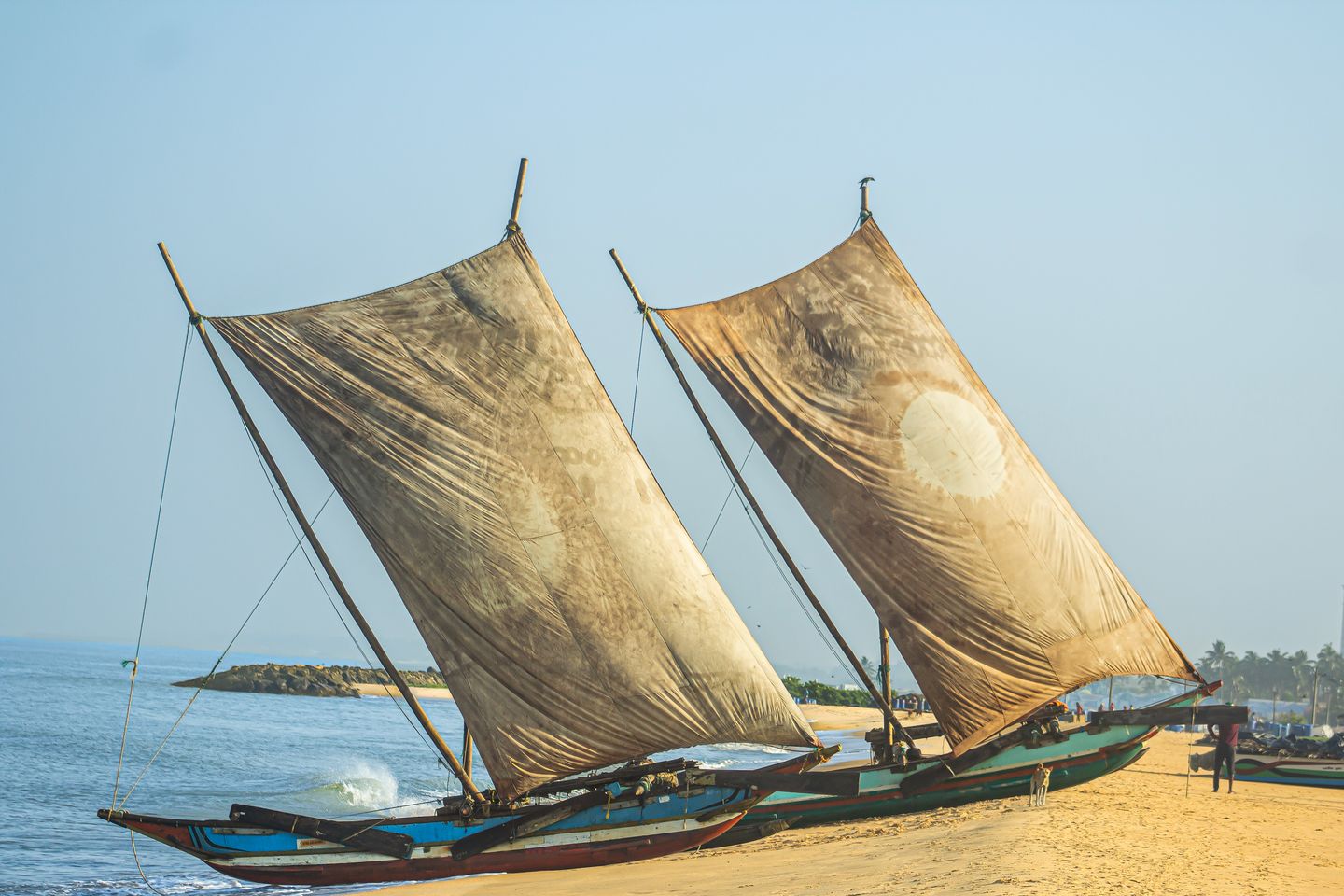
Further south, Bentota is the west coast resort and water sports strip between Colombo and Galle, and Hikkaduwa has coral and green turtles straight off the beach, with an older package-holiday feel. Colombo itself is a city stop, not a beach one. For a quieter coast north of the airport, Kalpitiya is one of our 5 secret places in Sri Lanka.
Read more: things to do in Negombo
Best beaches on the east coast
The east coast is the mirror image of the south: dry and calm from May to September, when Mirissa and Unawatuna are wet. It is less developed, and the beaches have far more space on them.
Trincomalee, Nilaveli and Uppuveli
Most visitors come to Trincomalee for the beaches north of town. Uppuveli, 6 km north, is the default base, with guesthouses, beach bars, a nightly volleyball game and kitchens like Trinco Lanka Restaurant and Rice 'n' Curry. Nilaveli, 15 km north, is four kilometres of wide golden sand with almost nobody on it, but fewer places to eat. Marble Beach, about 45 minutes away on the far side of the harbour, is a sheltered bay so flat it reads as a lake, inside an air force area with a small entry fee.
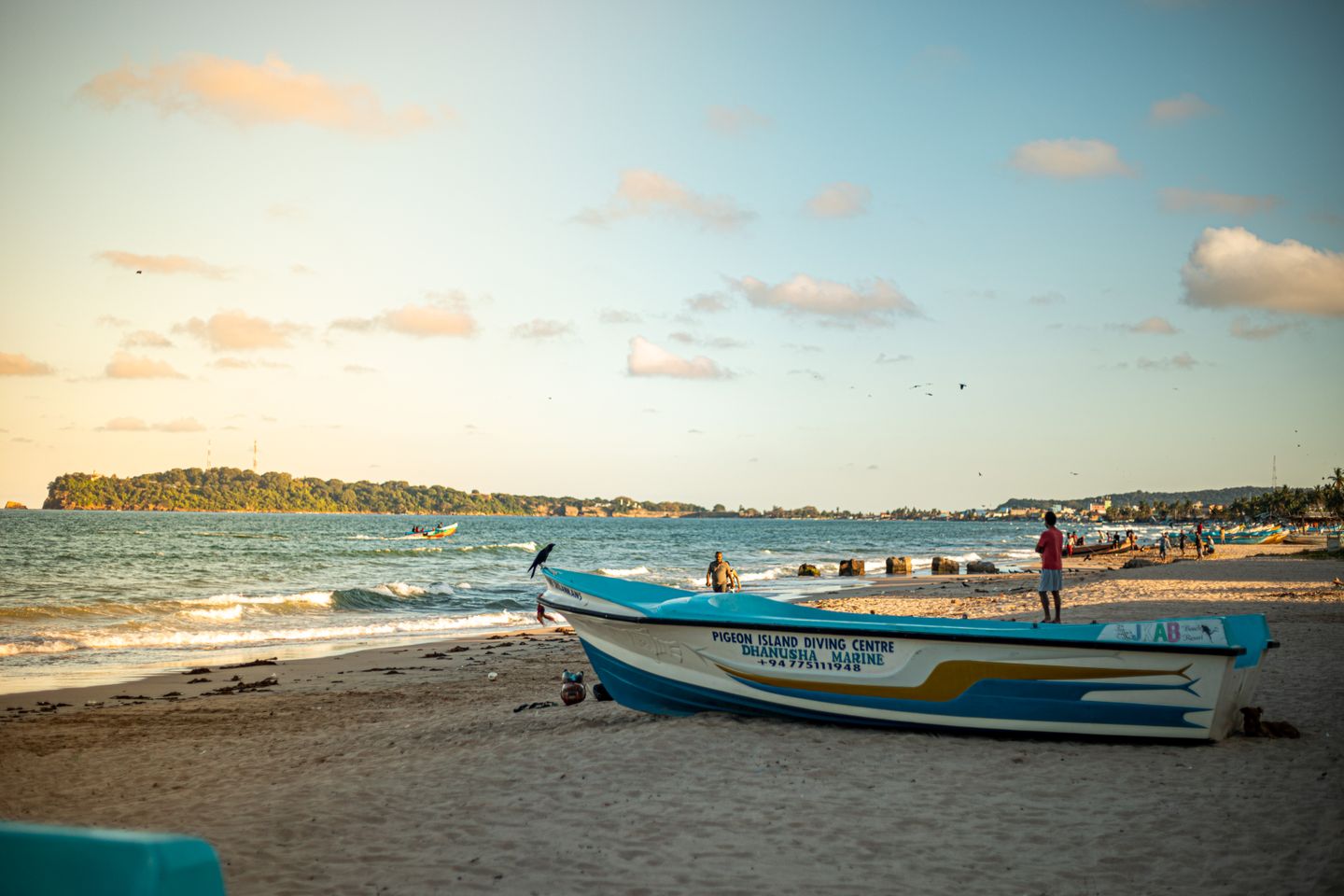
Pigeon Island is the classic snorkelling trip, at about €41 per person for park entry, but two publishers report the reef as badly damaged, so set your expectations. Whales pass offshore too, most reliably from May to August. Outside the season many shops and restaurants close from October to early January. Travellers typically stay three nights here.
Read more: things to do in Trincomalee
Arugam Bay
Arugam Bay exists for the waves. The right-hand point break at the north end of the bay is the country's best-known wave, with gentler Baby Point in front of the village. Peanut Farm Beach, 15 to 20 minutes south by tuk-tuk, is wide, quiet and popular with surf schools, and Elephant Rock is a five to ten minute climb to a viewpoint over the lagoons. Crocodiles live in those lagoons and wild elephants use the roads, especially towards evening. Most of the village shuts roughly from November to March, and on more than half of the trips that include it, travellers arrive straight from Ella.
Mirissa or Tangalle? Choosing your beach base
Most travellers have time for one or two beach bases. Here is where each type of traveller fits best, with a day trip for the other side.
- First-timers: Mirissa. Everything is walkable, the whale boats leave from the harbour, and Weligama's surf schools are 15 minutes west. Day trip: Galle Fort.
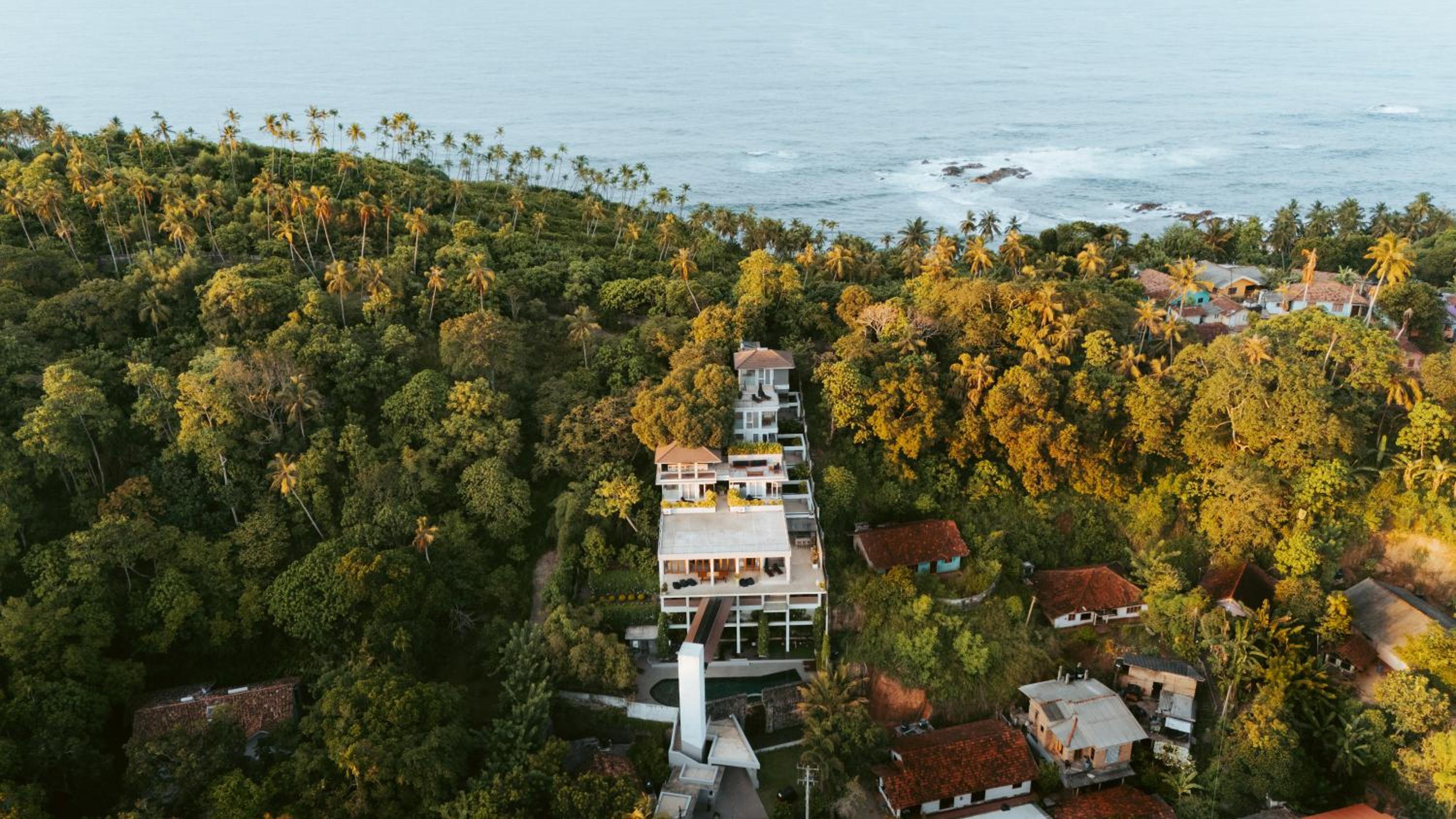
- Couples: Tangalle, at Goyambokka or a headland stay with a pool. Day trip: Silent Beach in the morning, then Hummanaya Blow Hole when the swell is up.
- Surfers: Hiriketiya or Weligama from December to March, Arugam Bay from May to September.
- Families: Unawatuna, for the reef-calmed water and the turtles at Dalawella. Day trip: Galle Fort, ten minutes away.
- Budget: a guesthouse one street back from the beach in Mirissa or Unawatuna, or Medaketiya in Tangalle. The beach strips are where the prices go up.


Surf beaches and surf camps
Sri Lanka surfs on two coasts in two seasons. The south coast works roughly from November to April, with beginner sand-bottom bays at Weligama and Hiriketiya and reef points at Midigama and Kabalana. The east coast, led by Arugam Bay, runs from about May to September, when you surf mornings before the wind turns. We are writing separate guides to surf camps and south coast surf; until then, find a surf lesson in Weligama.
When to go and beach safety
| Coast | Best months | Also works | Avoid |
|---|---|---|---|
| South and west (Negombo to Tangalle) | December to March | April, August, November | May to July, September, October |
| East (Trincomalee, Arugam Bay) | May to September | April | October to January |
August is the one month when both coasts can work, and October is the wettest month on the whole island. For month by month detail, read our best time to visit Sri Lanka by month and coast.
The sea is the biggest physical risk in Sri Lanka, more than anything on land. Rip tides and heavy shore break have drowned people, and several of the prettiest beaches, Tangalle's main bay among them, are not swim beaches at all. A few rules keep you safe:
- Swim at sheltered bays: Unawatuna, Goyambokka, Secret Beach in Mirissa, or inside the marked area below Galle lighthouse.
- Reef breaks create channel currents, so ask your guesthouse where locals swim.
- At Arugam Bay there are almost no lifeguards, and the lagoons have crocodiles.
- The sea is 27.5 to 30°C all year, so the question is always currents, never temperature.
Beachwear stays on the beach. Cover shoulders and knees when you walk through town or visit a temple, and remember that every full moon (Poya) is a public holiday when alcohol sales stop. In Tangalle, Poya is also the one day the empty sand fills with Sri Lankan families.
How to fit the beaches into your Sri Lanka route
Across the more than 33,000 Sri Lanka trips planned with Stippl, travellers follow the same clockwise loop: in at Colombo or Negombo, up to the Cultural Triangle, into the hill country around Kandy and Ella, then down to the south coast and out. A typical trip runs three weeks with about nine stops, and nine in ten stops are three nights or fewer. So the beach usually closes the trip, and it is where most travellers finally slow down.
From Ella the road to the south coast runs via Wellawaya and takes three to four hours by car, which puts Tangalle, Hiriketiya and Mirissa within one travel day. Mirissa is the beach stop travellers add most often, typically for two nights. A few ways to split the coast:
- One week of beach: Tangalle (two nights), Hiriketiya (three nights), Galle or Unawatuna (two nights).
- Short on time: Mirissa (two to three nights), then one night in Galle before the airport.
- East coast season: Trincomalee (three nights) and Arugam Bay (three nights), coming down from Ella.
Our 2 week Sri Lanka itinerary, day by day shows how the beach days fit after the hills.
Turn these stops into a route
Pick your favourites and Stippl orders them, adds travel times and builds the day-by-day.
Plan your beach days in the Stippl app
Add your beach towns to a route in the Stippl itinerary planner, then drag them into coast order: Tangalle, Hiriketiya, Mirissa, Unawatuna, Galle, heading west towards the airport. Stippl adds the travel time between each stop, so you can see whether a beach day turns into a travel day. More than 33,000 Sri Lanka trips have been planned with Stippl, and the pattern is clear: two or three nights per beach, one region at a time.
Save these to your trip in Stippl and they are on your map before you land.
Save the beaches from this list, mix in a whale trip or a surf lesson, and balance each beach day with a sight like Galle Fort or Coconut Tree Hill at sunrise.
Frequently asked questions about Sri Lanka
Many travellers pick Silent Beach or Goyambokka near Tangalle for scenery, Hiriketiya for its surf bay, and Mirissa for sunsets and whales. Four separate guides name Silent Beach the best beach they saw on the island. Beauty is personal, so match the beach to what you want to do there.
Mirissa is livelier, with whale watching from late November to April, more places to eat and everything within walking distance. Tangalle is quieter, with long empty beaches and nesting turtles at Rekawa. Its main bays are not for swimming, so base yourself at Goyambokka or book a stay with a pool.
It depends on your dates. The south coast has more variety and is at its best from December to March. The east coast, with Trincomalee and Arugam Bay, is the better choice from May to September. August is the one month when both can work, and October is wet everywhere.
Yes, the island has a wide mix of surf bays, calm swimming spots and quiet stretches. The sea is rough at many beaches, though, and some of the prettiest are not safe for swimming. Choose a sheltered bay like Unawatuna or Goyambokka, check the season and ask locally about currents.
Plan two to three nights per beach town. Across the more than 33,000 Sri Lanka trips planned with Stippl, Mirissa is the beach stop travellers add most often, typically for two nights, while Trincomalee and Arugam Bay usually get three. One week covers two or three beach bases on one coast.
Ready to pick your coast? Build your route in the Stippl itinerary planner, add the beaches from this list and let the app order them along the coast.