
Plan Sri Lanka in Stippl
Day-by-day planning, stays and budget in one app, with every place from this guide already on the map.
Download the appBest time to visit Sri Lanka in short
There is no single best month for the whole island, and that is good news: somewhere is always dry. Here is the quick version, coast by coast.
| Where | Best months | Wettest stretch |
|---|---|---|
| South and west coast (Colombo, Galle, Mirissa) | December to March | May, then September to November |
| Hill country (Kandy, Ella, Nuwara Eliya) | February and March, plus June to August for Ella | October and November |
| Cultural Triangle (Sigiriya, Anuradhapura) | January to March, and June to August | November |
| East coast (Trincomalee, Arugam Bay) | May to September | November to January |
What is the best month to go? February is the safest single month for a trip that covers the whole island. If your dates are fixed in the northern summer, go anyway and swap the south coast for the east.
Sri Lanka rainy season: the two monsoons explained
Sri Lanka has two rainy seasons, not one, and they hit different coasts. The mountains in the middle of the island split the weather, so while one side is soaked the other is sunny. Between the two monsoons sit two shorter changeover periods with storms almost everywhere.
It stays warm all year on the coast, with daytime highs around 29 to 31°C in every month. So the Sri Lanka rainy season is never really a temperature question. It is a question of which side of the island you are on. Our Sri Lanka rainy season guide has the rain coast by coast and month by month.
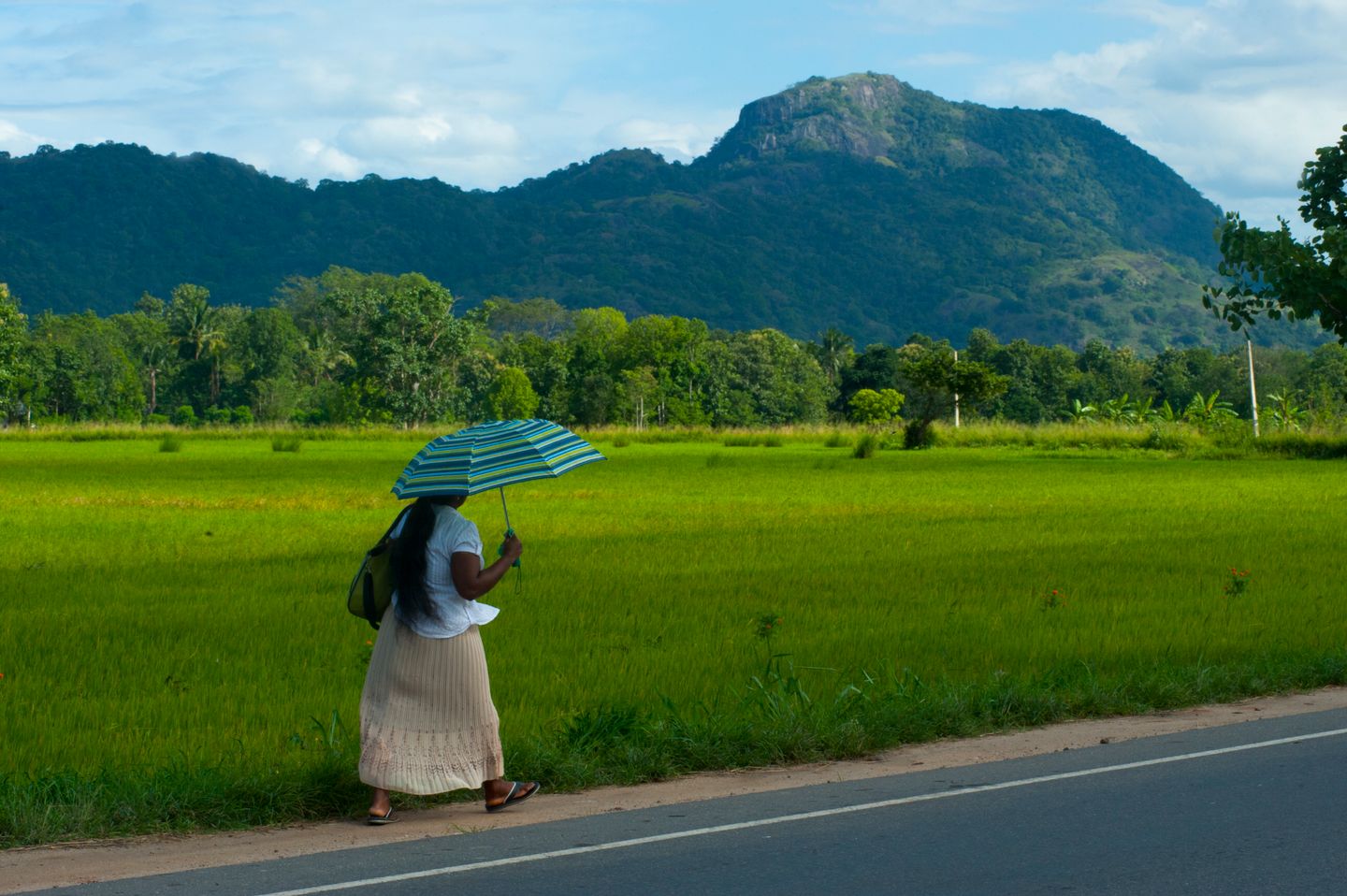
Southwest monsoon: Colombo, the west and the south coast
The southwest monsoon (locally called Yala) runs roughly May to September. It lands hardest in May: the rainy season in Colombo starts with a jolt, and the sea on the west and south coast turns rough. Many beaches around Galle and Mirissa are not safe for swimming then, and the whales have moved to the east.
The middle of this monsoon is gentler than its reputation. July and August are a real gap in Colombo and Negombo, with far less rain than May or October and cheaper rooms on the coast.
Northeast monsoon: the east coast and the north
The northeast monsoon (Maha) arrives around October and November and stays into the new year. This is when the east goes quiet. In Trincomalee and Arugam Bay many guesthouses and restaurants close from roughly November to January, so cheap rooms there usually mean shut doors. Meanwhile the south and west coast have their best weather of the year.
The two inter-monsoon periods
April and the stretch from late September into November are the changeovers. Expect sunny mornings and heavy afternoon thunderstorms rather than all day rain, plus fewer people and lower prices. April is the kinder of the two. October is the hardest month on the calendar, when thunderstorms can hit anywhere on the island.
What is the rainiest month in Sri Lanka?
It depends on the coast. On the west and south coast October is the wettest month: Colombo gets 395 mm over 19 days, against 70 mm in February. In the hill country October and November are the wettest. On the east coast the heaviest rain falls from November to January.
What the rainy season is really like for travellers
Rain in the "wrong" season usually comes as a short burst in the morning or evening, not a washed out day. The real costs are practical. Hill country roads get slow after heavy rain, hikes around Ella and Nuwara Eliya turn muddy and slippery, and the sea on the monsoon coast is rough. The upsides are real too: greener countryside, waterfalls at full force, quieter sights and cheaper rooms. Temples in Kandy and the climb at Sigiriya work fine under cloud if you start early.
Sri Lanka weather month by month
The coast and lowlands stay warm all year, so Sri Lanka temperature by month barely changes there: Colombo's average moves less than two degrees between January and May. Kandy runs about three degrees cooler than the coast. Up in Nuwara Eliya the average sits between 15 and 17°C all year, with nights near 10°C in January, so pack a fleece for the hills whatever the month.
January
Peak season on the south and west coast and in the Cultural Triangle, and the driest month nationally. Sri Lankan holidays fill trains and temples too, so book the hill country train early. The east coast is still in its monsoon.
February
The safest month for the whole island: dry in the south and west, clear views in the hills, dry around Sigiriya. The east is drying out but still a gamble. If you can pick only one month, pick this one.
March
The last full dry month on the south coast and the classic hiking month in the hills. Whale watching off Mirissa is still on. The east coast starts to open towards the end of the month.
April
The first changeover. The south gets wetter and hotter, the hill country is at its best, and the east coast season begins. Mid April brings Sinhala and Tamil New Year, when the whole country travels, so book rooms ahead.
May
The southwest monsoon lands on Colombo, Galle and Mirissa, and May is one of the wettest months on that coast. Head east instead: Trincomalee and Arugam Bay open properly. Vesak Poya brings lanterns to Colombo and Kandy.
June
The east coast is in its stride, with calm sea and dry days. Ella sits in a rain shadow and is at its driest from June to August, and Sigiriya has its driest month too. The south coast is wet but cheap.
July
Peak month for the east coast and its surf. Kandy's Esala Perahera falls in July or August, and its dates move with the lunar calendar every year. Rooms in Kandy fill fast around it.
August
The one month both coasts can work: the west and south are often drier than in July or September, and the east is still in season. The elephant gathering at Minneriya is at its peak. Expect busy trains in the hills.
September
The east coast season winds down and the west turns wet again. Yala's main block normally closes for maintenance this month, so plan safaris at Udawalawe instead.
October
The hardest month to plan: storms can hit anywhere, and it is the wettest month on the west and south coast and in the hills. It also has the fewest tourists. Keep plans flexible and expect to swap days around.
November
A transition month, with the south drying out and the east settling into its monsoon. More on November in its own section below.
December
The south coast season starts and the island fills up, with Sri Lankans on holiday too. It is one of the most popular months to visit, with the west and south coast at their best and the east coast wet and largely closed. We are writing a full guide to Sri Lanka in December and its weather, coast by coast.
Best time to visit Sri Lanka by region

South and west coast: Galle, Mirissa and Colombo
December to March, and it is a narrow window. Galle's driest month is February, and from May the southwest monsoon brings rough sea and heavy showers. The quieter gap in July and August suits a city stop or a fort walk, not a swimming holiday. For beach days, December to March is the time to book the coast around Mirissa.
East coast: Trincomalee
The mirror image of the south. Trincomalee's season runs May to September, with calm sea, diving from April to September and the best whale odds from May to August. From October much of it starts to close for the northeast monsoon.
Cultural Triangle: Sigiriya and Kandy
The dry zone has two good windows: January to March, and June to August. April and May are the hottest, with the first storms. Climb Sigiriya before 9 am or late in the afternoon, never at midday on the bare rock. Kandy is driest in February and March, and August brings the Perahera with drier weather than the months either side.
Hill country: Ella and Nuwara Eliya
The hill country works close to year round, because rain matters less for tea estates and waterfalls than for beach days. For the clearest views, go to Nuwara Eliya and Horton Plains in February or March. Ella has a second dry window from June to August, exactly when the south coast is wet, which makes it the hinge of a summer route. October to December brings wet, cold evenings.
Best time to visit Sri Lanka by activity
Best time to visit Sri Lanka for beaches
Match the beach to the month. The south and west coast are for December to March, the east coast for May to September. Even in season the sea is rough at several southern beaches, so pick sheltered bays for swimming. Our guide to the best beaches in Sri Lanka sorts them by coast and season.
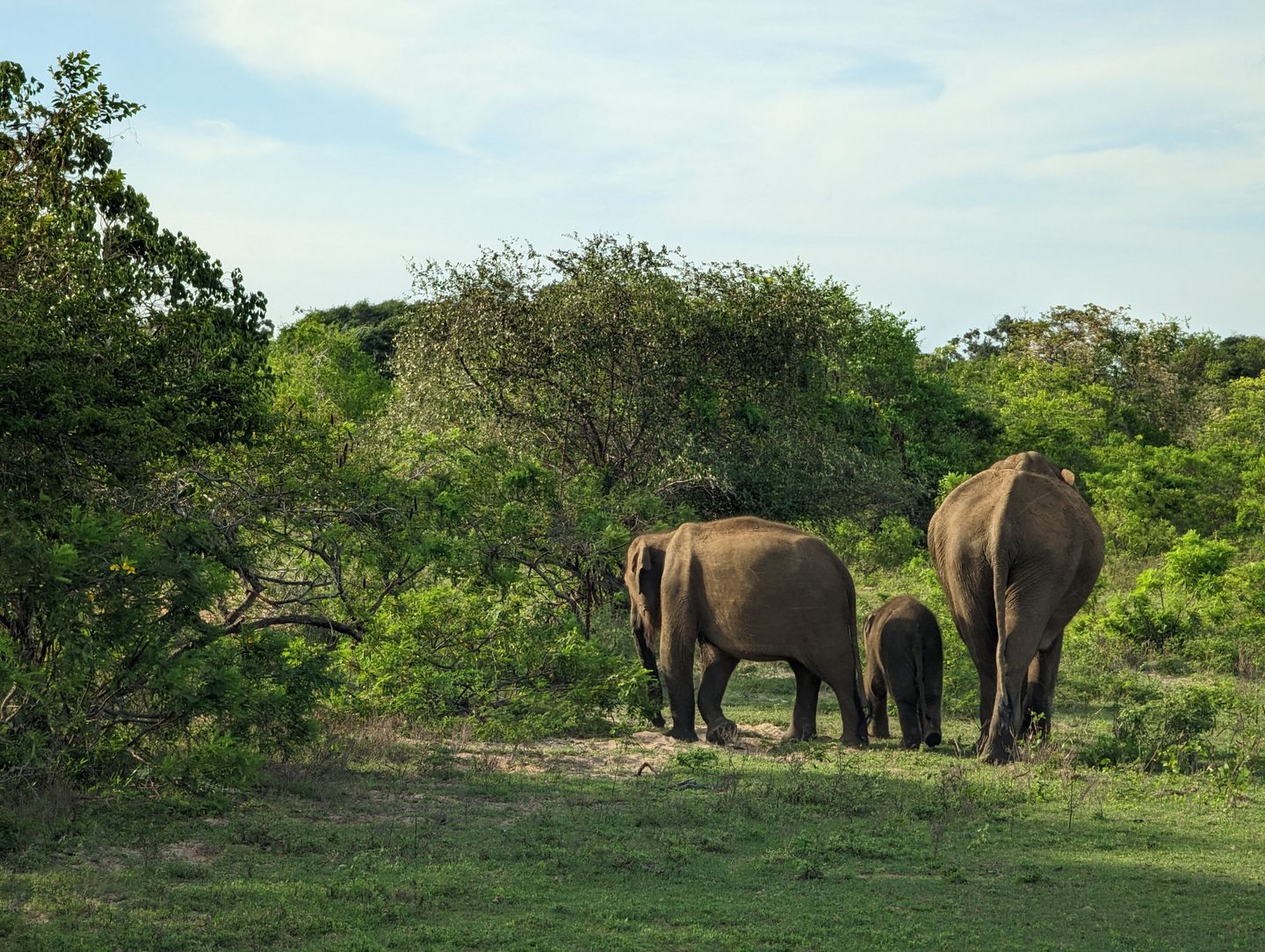
Best time to visit Sri Lanka for wildlife
Yala is best from February to July, and April to July is the leopard window, when waterholes shrink and animals gather at what is left. Its main block usually closes in September. Udawalawe has elephants in every month. The Minneriya gathering runs from around July to October, peaking in August and September. Whale watching off Mirissa is most reliable from December to March, while operators sell a wider window; check how a boat treats the whales before you book a Mirissa whale watching trip.
Best time to visit Sri Lanka for surfing
Two coasts, two seasons. The south and west work from roughly November to April, with beginner sand bottom bays at Weligama and Hiriketiya. Arugam Bay's point breaks run from about May to September, with April and October as the edges. On the east coast, surf in the morning, before the wind swings onshore after midday.
Best time to visit Sri Lanka with family
Go in the dry season of the coast you plan to stay on, so the sea is calmer and rain does not break up the day. Drives take longer than the map suggests, and a 200 km hop can eat a full day, so plan fewer stops and add rest days. February and March avoid both the heaviest rain and the hottest weeks around April.
Worst time to visit Sri Lanka
The honest answer: it depends on where you go. The worst time for a south coast beach holiday is May, and again September to November. The worst time for the east coast is November to January, when the rain is heaviest and many places close. For hill walks, avoid October and November.
If one month is the worst for the whole island, it is October, when thunderstorms can hit anywhere. Even then a trip works if beaches are not the point: plan temples, food and train days, and keep a flexible night or two. Travellers coming from nearby for a short trip, including from India, can follow the same simple rule: pick the coast that is dry and stay on that side.
Is November a good time to visit Sri Lanka?
It can be, if you plan around the transition. November is when the south and west start to dry out and the whale season opens off Mirissa late in the month. But the rain has not finished: the hills and Sigiriya are at their wettest, and the west coast still has storms and some cyclone risk into December. The east coast is in its monsoon and largely closed. The best time to visit Sri Lanka in November is the second half of the month, with the beach days at the end of the route and a flexible night or two before them.
Best time to visit Sri Lanka and the Maldives
The two pair well, because their best weather overlaps. The Maldives' dry season runs from about December to April, with January to March the most reliable, which lines up with Sri Lanka's south and west coast season. May is a wet, windy changeover in both places. If you are combining them from June to September, put Sri Lanka's east coast and hill country on the plan and expect showers in the Maldives.
Is 7 days long enough in Sri Lanka, and Bali or Sri Lanka?
Seven days covers one region, or two at most. The Cultural Triangle plus Kandy works, as does the hill country plus the south coast in the winter months. For the full loop you need two to four weeks; our 2 week Sri Lanka itinerary shows a day by day version.
Bali or Sri Lanka comes down to the season. Bali's dry season is May to September and its wettest months are December and January, exactly when Sri Lanka's south coast is at its best. In the northern summer both work, as long as you take Sri Lanka's east coast. The best time to visit Bali has the full calendar for comparison. Sri Lanka packs ancient cities, train rides, safaris and beaches into one compact island.
Plan around the season in the Stippl app
Across the more than 33,000 Sri Lanka trips planned with Stippl, travellers keep coming back to the same loop: in at Colombo or Negombo, up to the Cultural Triangle, into the hill country, down to the south coast and back out. A typical trip runs three weeks with nine stops, usually two nights each, and nine in ten stops last three nights or fewer. Colombo, Kandy, Ella, Negombo and Sigiriya are the stops travellers add most often.
That loop is built for December to March, ending on the dry south coast. From May to September, keep the same shape and swap the ending: Sigiriya and Ella are both dry from June to August, and Trincomalee or Arugam Bay replaces Mirissa and Galle for the beach days. If there is a few days of slack, fill them with a second hill country stop or a safari rather than a monsoon beach.
Most travellers start planning about ten weeks before they fly, which is plenty of time to check which coast is dry before you book. Build the loop in the Stippl itinerary planner, drag the beach days to the dry coast, and move a day around when the forecast changes. For more hidden corners to slot in, see our secret places in Sri Lanka.
Turn these stops into a route
Pick your favourites and Stippl orders them, adds travel times and builds the day-by-day.
Frequently asked questions about Sri Lanka
It depends on the coast. December to March is best for the south, west, hills and ancient cities, while the east coast shines from May to September. February is the safest single month for the whole island. Across the more than 33,000 Sri Lanka trips planned with Stippl, travellers simply move the beach days to whichever coast is dry.
There are two monsoons on opposite sides of the island. The southwest monsoon brings rain to the west, south and hill country from roughly May to September. The northeast monsoon soaks the east and north from around October or November into January. Between them sit stormy changeover months, so the island always has a drier side.
It depends on where you are, because each coast has its own wet season. On the west and south coast October is the wettest month, with May close behind. The hill country is wettest in October and November, and the east coast gets its heaviest rain from November to January. October is the hardest month island wide.
Not always. Rain often comes in short bursts in the morning or evening, crowds are smaller, rooms are cheaper and the countryside is greener. What suffers is a beach plan on the monsoon coast, so move your beach days to the dry side and keep temples, food and train rides for the wetter stretches.
Seven days is enough for one or two regions, such as the Cultural Triangle plus Kandy, or the hill country plus the south coast in the winter months. Drives take longer than the distances suggest, so do not try to fit in everything. For the full loop most travellers take around three weeks.
Ready to pick your coast? Start a Sri Lanka trip in Stippl, add the stops you want, and order them so the sunny side of the island gets your beach days.