


Below are five steps to plan it yourself, the connection map that joins Palawan, the Visayas and Siargao, and a real fourteen night route: a night in Manila, a flight to El Nido, the boat to Coron, a flight to Cebu for Moalboal, and the ferry to Bohol, with the time, the price and the booking for every leg.
Plan Philippines in Stippl
Day-by-day planning, stays and budget in one app, with every place from this guide already on the map.
Download the appHow to plan a trip to the Philippines: the short version
Go in the dry season, because the islands are joined by boats and boats do not sail well in typhoon weather. For two weeks, pick two regions at most, such as Palawan and the Visayas, and give each island three or four nights. Manila and Cebu City are one night stops between flights. Book the domestic flights months ahead, set a daily budget in pesos and save the trip on your phone, because island wifi is slow or absent.
| Step 1 | Pick your season: December to April for most islands |
| Step 2 | Choose two regions, three or four nights per island |
| Step 3 | Join the islands: flights between groups, boats inside them |
| Step 4 | Set a daily budget in pesos, with flights and tours as lines |
| Step 5 | Book, share with your travel friends, go offline |
Already planned and wondering what to put on your phone? Our guide to the best apps for the Philippines covers the apps for the ground, from eTravel to Grab.
Five steps to plan your Philippines trip in Stippl
Start a trip in the Stippl itinerary planner with your arrival airport, Manila or Cebu, as the first stop. Almost every Philippines route begins at one of those two, and the rest of the plan hangs off whichever you pick.
Step 1: pick your season
The Philippines has a dry season, roughly December to April, and a wet season from about June to October, with typhoon risk peaking from August to October. February is the driest month of the year, and February to April is the only stretch when most of the country is dry at once. The wet season is not weeks of non-stop rain but daily downpours, rough seas and cancelled boats, and that is what breaks an island route.
The weather is also regional, and two exceptions are worth knowing. May and November are the shoulder picks, cheaper and calmer, with good sea conditions. And Siargao runs the opposite calendar: its dry season only starts in March and December to February is its rainiest stretch. Our guide to the best time to visit the Philippines goes island by island.
Step 2: choose your islands and nights per stop
Now add your stops. Across the more than 64,000 Philippines trips planned with Stippl, a typical stop gets three nights, yet nearly a third of all stops are a single night, and few stops get two. That pattern is the whole country: one night stops between flights, three night stays on the islands.
The one night stops are the airport cities. Manila is the place travellers add most, and most of them give it one night; Cebu City is the same. The islands are where people stay: El Nido gets about three and a half nights on average, Coron, Moalboal and Bohol about three each.
So choose a few islands rather than many, give each one three or four nights, and keep Manila and Cebu to one night between flights. In Stippl you set the nights per stop and the dates recalculate as you drag them, so you see at once whether a fifth island still fits.
Step 3: join the islands by plane and boat
Between every two islands sits a leg, and there are only two kinds: a domestic flight or a boat. Flights are effectively unavoidable, with Cebu Pacific, Philippine Airlines and AirAsia on the main routes and AirSwift flying into El Nido's Lio airport. Boats come in two tiers: fast ferries such as OceanJet, which run to a timetable, and wooden outrigger bangkas, which are cheaper, packed and wet.
Add every leg to your Stippl trip with its departure time, and the plan shows you the travel days. How the islands join up, and when each group has its weather, gets its own section below: the connection map.
Step 4: set your budget in pesos
As a rough guide, a budget day of dorm beds, carinderia plates, buses and jeepneys runs €19-47 (₱1,370-3,380). Mid-range, with private rooms, restaurant meals, island hopping tours and some flights, runs €55-100 (₱3,950-7,190). Resorts, private boats and diving cost more.
Our own numbers show where the money really goes. Travellers who logged their Philippines spending in Stippl paid €11 (₱800) for a typical dinner, €8.30 (₱600) for lunch and €4.20 (₱300) for a taxi. The two big lines are the ones you cannot skip: a typical island tour came to €47 (₱3,400) and a typical domestic flight to €88 (₱6,350). Booking flights months ahead is the biggest saving, with early fares around €40-60 (₱2,880-4,310) against €105-115 (₱7,550-8,270) last minute.
Log every expense in pesos at the stop where you spent it and Stippl shows the total in your own currency. Boats, tricycles and vans are priced per vehicle, not per person, which makes a group cheaper per head: the budget planner splits a shared bangka between the people on it. Our Philippines trip cost guide has the full two week breakdown.
Budget
€19–47
dorm bed, carinderia plates, buses and jeepneys, free beaches and waterfalls
Mid-range
€55–100
private rooms, restaurant meals, island-hopping tours, some domestic flights
High-end
€75–115+
boutique hotels and resorts, private boats, diving, private transfers
Step 5: book, share and go offline
Book the things that sell out first: the domestic flights (El Nido, Coron and Siargao routes go first in peak season), rooms around Christmas, New Year and Holy Week, and the expedition boats. Island hopping tours are the exception: they are usually cheaper booked locally in El Nido or Coron.
Then invite your travel friends, so everyone sees the same route and the same ferry times. Before you fly, register on the free eTravel site within 72 hours of arrival; it gives you the QR code immigration scans.
Last, open the trip in the app while you still have good wifi. Wifi is slow across the country and absent on some islands, so having the itinerary, bookings and saved places on your phone is what keeps the plan working on a boat.
Island hopping by plane and boat: the connection map
Palawan, the Visayas and Siargao each have their own way in and their own dry months. Put the connections in first and the beaches fall into place around them.
| Group | Islands | Way in | Moving inside the group | Best window |
|---|---|---|---|---|
| Palawan | El Nido, Coron, Port Barton, Puerto Princesa | Fly from Manila: about 1.5 hours to El Nido, 1 to 1.5 hours to Coron | Fast ferry El Nido to Coron, about 3.5 hours, or a 40 minute flight | December to April, February the driest |
| The Visayas | Cebu, Moalboal, Bohol, Siquijor | Fly to Cebu, the second hub | Bus and fast ferry: Cebu to Bohol about 2 hours, Bohol to Siquijor about 90 minutes | December to April; Cebu often stays dry into June |
| Siargao | Siargao | Fly from Cebu, about 1 hour, or Manila, about 2 hours | Scooter on the island | March to October, the opposite of the rest |
Three rules make the connections hold.
Fly between groups, ferry inside them. The ferry from Cebu to Siargao exists but takes about 12 hours, and the overnight boat from Manila to Coron 11 to 13. Between groups, the plane wins every time. Inside a group, the boats are the trip: cheap, scenic and short. The one link that skips Manila is Palawan to Cebu: from Coron or Puerto Princesa you fly straight into the Visayas.
Keep the boat away from the flight. Weather cancels crossings, and a missed boat means a punishing last minute flight or an unplanned night. Put the most weather sensitive boat in the middle of the trip, never the day before a flight, and keep a buffer night before any flight that matters. Be back in Manila at least ten hours before an international departure, because afternoon domestic flights are often delayed.
Match the season to the group. February to April is the only stretch when most of the country is dry at once. Typhoon risk runs from June to December and peaks from August to October, worst on the eastern seaboard. Siargao turns it around: dry from March, its best surf from August to November, and December to February its wettest months. A classic December route that ends on Siargao lands you there at exactly the wrong time.
In Stippl each connection is a leg with its time, so you see at a glance how many days are travel days and whether a fifth island still fits.
Sample route: Manila to Bohol in 14 nights, by plane and boat
This is the route we would copy, as one trip in Stippl: one night in Manila, Palawan first, then a flight to the Visayas. It works best from December to April. Fourteen nights, five stops, three flights and two boat days.
| Stop and nights | Getting there | Time and price | Book with |
|---|---|---|---|
| Manila, 1 night | Fly in, Grab from the airport to Makati | 25 to 60 min, €4.20-8.30 (₱300-600) | Grab |
| El Nido, 4 nights | AirSwift flight into Lio | about 1h20, about €100 (₱7,190) one way in high season | AirSwift, months ahead |
| Coron, 3 nights | Fast ferry from El Nido town | about 3.5 hours, about €26-30 (₱1,870-2,160) | 12Go or the operator |
| Moalboal, 3 nights | Flight Coron to Cebu, then the Ceres bus south | 1h30 flight from about €30 (₱2,160), then 3 to 4 hours by bus for €3.50 (₱250) | the airline, bus ticket on board |
| Bohol, 3 nights | Bus back to Cebu City, OceanJet fast ferry to Tagbilaran | 4 to 6 hours in all, ferry about €16 (₱1,150) | 12Go or OceanJet online |
Three flights and two boats in two weeks: that is a normal Philippines fortnight, and the timeline in Stippl shows each one on its day. Prefer to go day by day through the Visayas instead? Our Philippines itinerary for 2 weeks runs Cebu, Moalboal, Bohol, Siquijor and El Nido.
Palawan: El Nido and Coron
One night in Manila is all most travellers give it, and it is enough to sleep off the long haul flight. Stay in Makati, use Grab rather than street taxis, and allow two hours for any journey across the city.
The AirSwift flight lands you at Lio, a short ride from El Nido town. Four nights fits what travellers plan and gives you two or three boat days: the island hopping tours A, B, C and D are standardised across every operator, at about €17-31 (₱1,200-2,200) each, plus the Eco-Tourism Development Fee of €5.60 (₱400), valid ten days. Stay in El Nido town for tours and bars, or Corong-Corong for sunsets and quiet. Our guide to the best time to visit Palawan covers the sea conditions month by month.

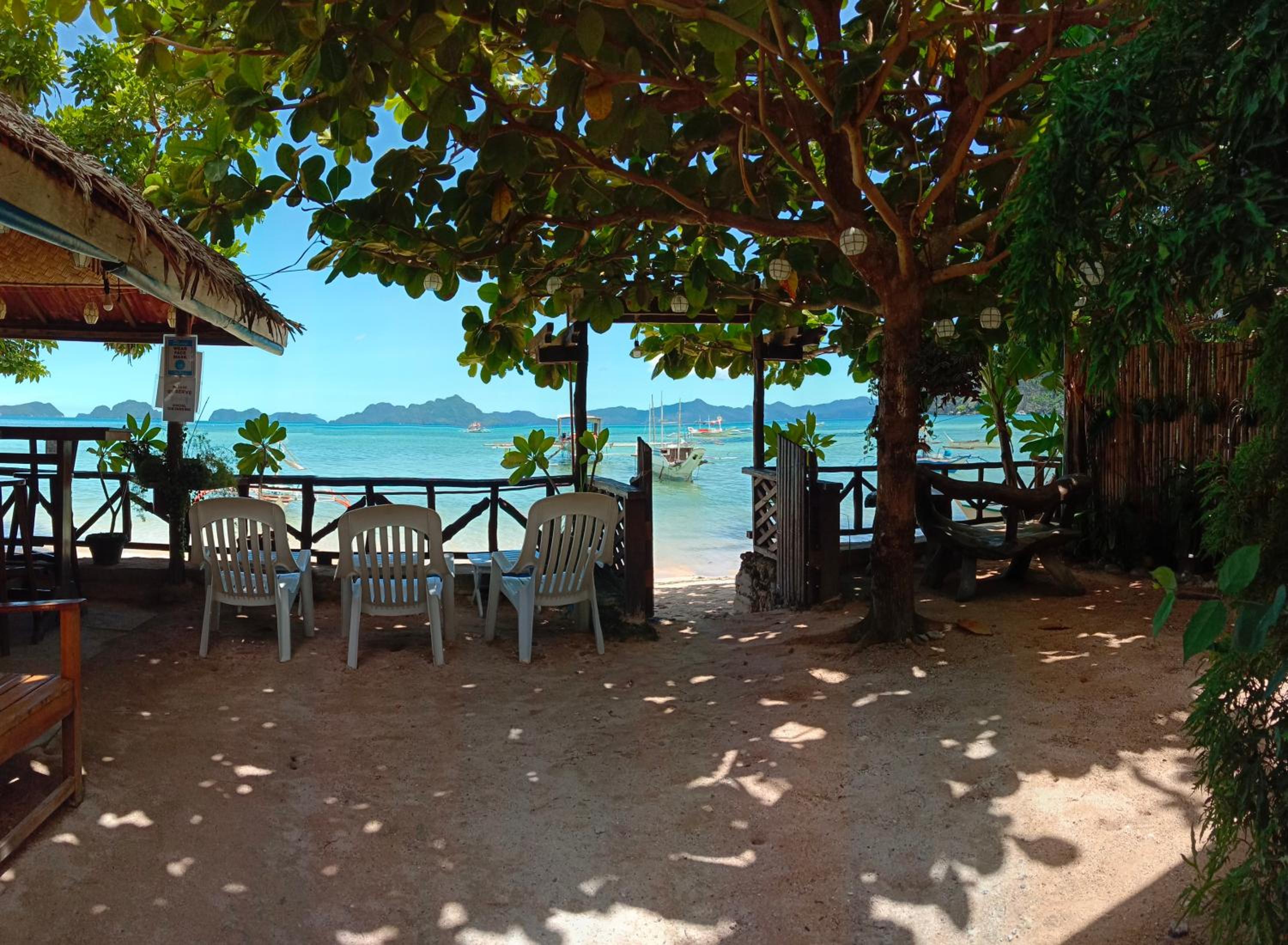
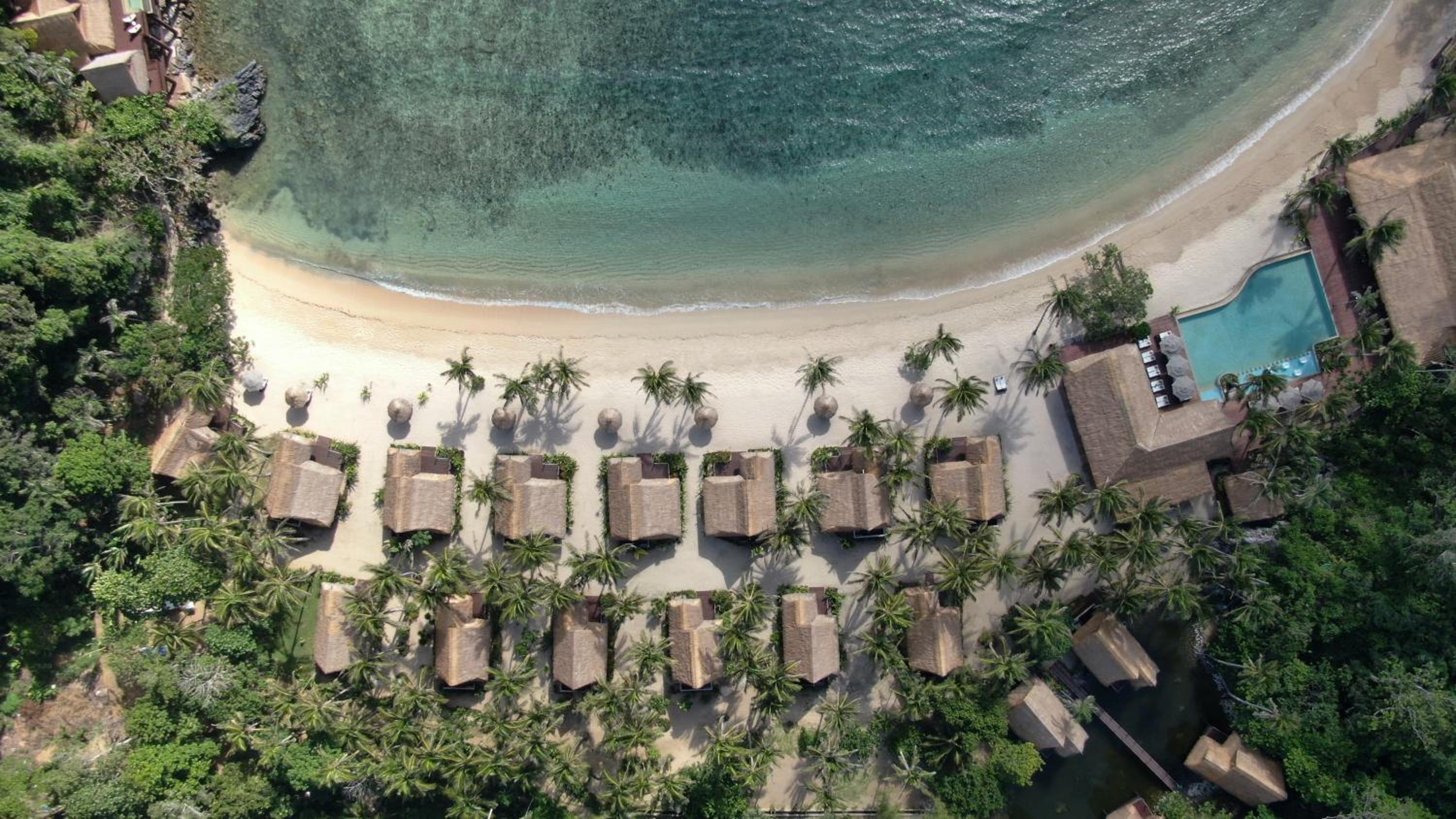


The fast ferry to Coron leaves from the port in town and arrives in town, about three and a half hours later. Coron Town is the base: unlovely, but it is the launchpad for the boat days to the lakes, lagoons and wrecks. Budget for the €2.80 (₱200) environmental fee on arrival and a separate fee at every site.

Editor's tip: Put your buffer night in Coron, not in Manila at the end. The El Nido to Coron ferry is the leg most likely to be cancelled for weather, and Coron has a flight to Cebu that lets you skip Manila entirely. If the boat sails on time, the spare night becomes one more boat day.
The Visayas: Moalboal and Bohol
From Coron, the flight to Cebu takes about 1 hour 30 minutes, the way to reach the Visayas without going back through Manila. Cebu's airport is on Mactan, across the bridge from the city, so take a taxi to the South Bus Terminal and the Ceres bus marked Bato via Barili to Moalboal. Stay on Panagsama Beach: the famous sardine run is a permanent shoal of millions of fish about fifteen metres offshore, and you swim to it from the beach with no boat and no tour.

For Bohol, ride the bus back to Cebu City and take the OceanJet fast ferry from Pier 1 to Tagbilaran, about two hours; book online, because the counters are packed. The real choice on Bohol is where to sleep: Panglao and Alona Beach for beaches, diving and food, or the mainland for the river and quiet. A countryside tour to the Chocolate Hills and the Loboc river takes a full day, from about €25 (₱1,800) per vehicle.

To fly home, take the ferry back to Cebu, or fly from Bohol-Panglao airport, about 1 hour 30 minutes to Manila with three carriers daily. Want a different last island? Siquijor is a daily boat from Bohol, and Siargao is about an hour's flight from Cebu, best from March.
Turn these stops into a route
Pick your favourites and Stippl orders them, adds travel times and builds the day-by-day.
How many days do you need for the Philippines?
Two weeks buys you two regions, and three weeks is the comfortable length for more. The trade is always the same: each extra island costs most of a day in transit.
One week. One island cluster. Coron and El Nido together, with the ferry between them, fill a week without a single domestic flight between them.
Ten days. Palawan plus one Visayan island, or Cebu, Moalboal and Bohol by bus and ferry, with no more than one flight.
Two weeks. The sample route above: Palawan and the Visayas, joined by one flight.
Three weeks. Room for Siquijor or Port Barton, or Siargao from March onwards, without dropping below three nights on any island.
Describe your trip, get a Philippines itinerary in seconds
Everything in this guide is already in Stippl. Tell the planner how long you have and what you like: it builds the route, the days and the travel times, and you edit whatever you want.
How much does a trip to the Philippines cost?
What a trip to the Philippines costs depends on two lines more than anything: how many domestic flights you take and how many boat tours you add. Food stays cheap everywhere, with a carinderia plate of rice and stew around €1.30-1.70 (₱95-120), and many beaches and waterfalls are free. Flights are the cost you cannot avoid, at a typical €88 (₱6,350) each in our travellers' logs, and tours are the biggest one you choose.
So count your flights and your boat days before anything else. Two flights and four tours already come to about €366 (₱26,300) per person at those typical prices, before a single bed; the rest of the budget is rooms and food, and those are cheap.
Philippines travel tips for first timers
Most Philippines plans go wrong on the islands and the connections, not on the beaches. Watch for these five.
Too many islands. Every island hop costs most of a day. Two regions in two weeks is plenty.
Leaving the El Nido tours to the last day. El Nido caps its daily visitors on the island hopping tours, so book them at least two days ahead, and not on your final full day.
Skipping the night in Manila. One night in Manila or Cebu between a long haul arrival and an island flight saves a missed connection.
Running out of cash. Cards work at large hotels and restaurants and almost nowhere else, and small islands may have no working ATM. BPI machines allow up to €278 (₱20,000) per withdrawal against about €139 (₱10,000) at most other banks, so stock up in the cities.
Forgetting the neighbours. Two in three Philippines trips planned with Stippl include another country, and half of those include Thailand, with Vietnam close behind. In Stippl the flight across becomes one more leg on the same trip.
Read more: things to do in the Philippines
Start with your arrival city and your season, and the rest of the route follows from the connection map.
Frequently asked questions about Philippines
Two weeks lets you combine Palawan and the Visayas without rushing. Across more than 64,000 Philippines trips planned with Stippl, a typical island stop gets three nights, so two weeks means four or five stops.
It depends on how many flights and island tours you add. A budget day runs €19-47 (₱1,370-3,380), and travellers in Stippl log about €88 (₱6,350) per domestic flight and €11 (₱800) for dinner.
The dry months, roughly December to April, with February to April the only stretch when most of the country is dry at once. Siargao is the exception, dry only from March.
Fly between the island groups and take the boat inside them: El Nido to Coron by fast ferry, Cebu to Bohol on OceanJet. Book the flights months ahead, and the ferries online where the operator sells them.
Travellers from more than 150 countries, including the EU, UK, US, Canada and Australia, enter visa free for 30 days, but check the rules for your passport. Everyone must register on the free eTravel site before arrival.
Three flights, two boats and five islands is a lot to hold in your head, and in the Philippines one cancelled ferry moves everything after it. Open the Manila to Bohol route in Stippl, swap in your own islands, and see each leg shift when the dates do.